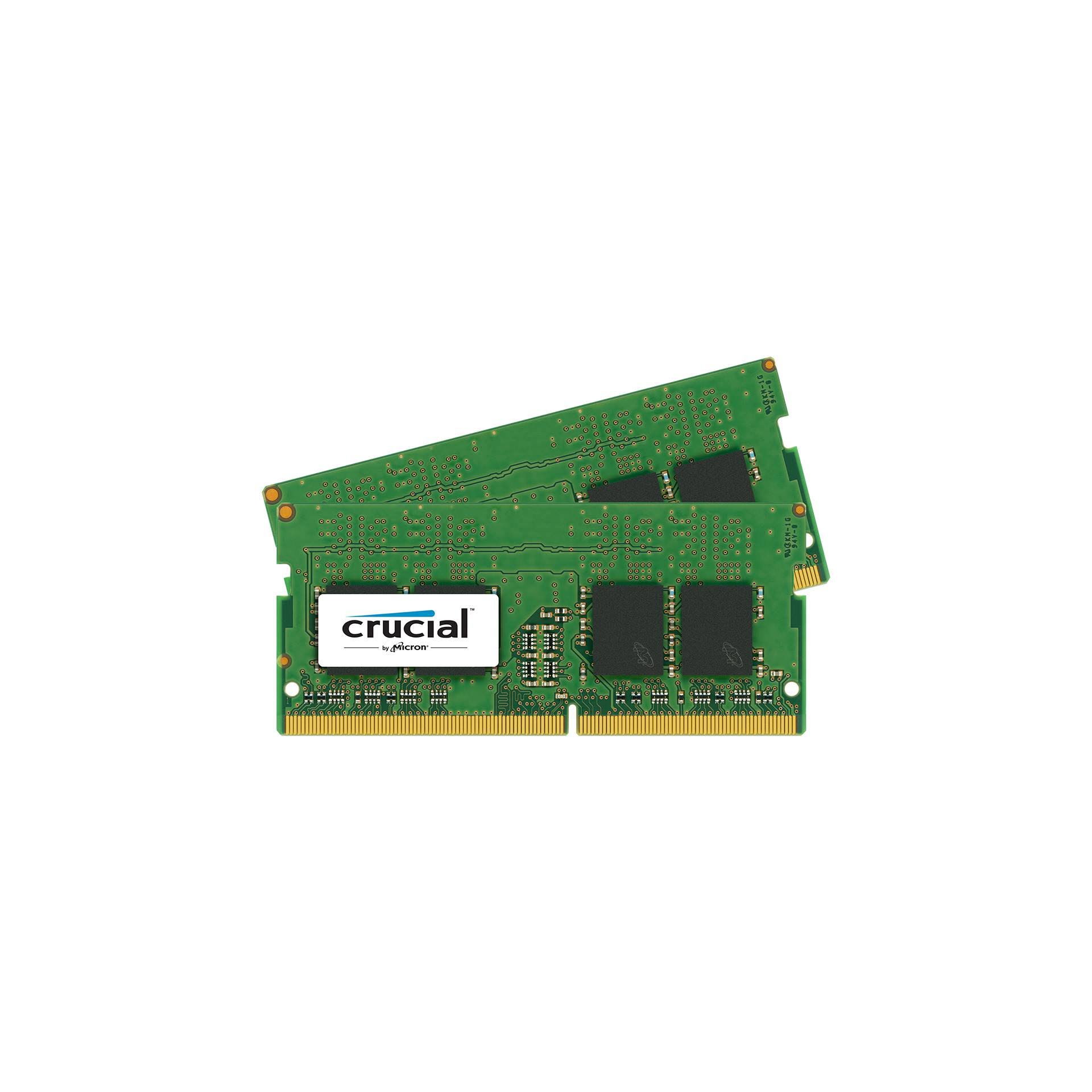
Product features of CT2K8G4SFS824A Crucial DDR4 - 16 GB IS_XR11X1Y1:
Extend battery life by using less power. Operating at just 1.2V compared to 1.5V for standard DDR3 memory, Crucial DDR4 SODIMMs consume 20% less voltage than standard DDR3 technology. Crucial DDR4 SODIMMs also contain other efficiency features, for an overall power reduction of up to 40%. Pack more memory into your laptop than ever before. Crucial DDR4 SODIMMs debut in densities up to 8GB, and as DDR4 technology develops, modules are projected to hit 32GB — allowing you to install twice as much memory as you could in a DDR3 system. Since laptops only have 1-2 memory slots, high-density Crucial DDR4 SODIMMs allow you to overcome this limitation and install more memory for faster mobile performance.Load applications faster and run demanding programs without lag. Crucial DDR4 SODIMMs debut at 2133 MT/s —more than 30% faster than DDR3 modules. Effortlessly multitask between apps and empower your system to fire on all cylinders. Crucial DDR4 SODIMMs increase memory bandwidth by over 30%, allowing your system to handle more data at once. Crucial DDR4 SODIMMs are optimized for next-gen platforms, allowing you to maximize bandwidth. Product performance and efficiency improvements are noted as comparisons between DDR3 and DDR4 memory technology. As of May 2014, standard DDR3 memory achieved speeds of 1600 MT/s and operated at 1.5V, compared to DDR4-2133, which will operate at 1.2V. When voltage reductions and all other energy-saving DDR4 features are factored in, DDR4 modules are projected to consume up to 40% less power. As DDR4 technology matures, speeds and bandwidths are projected to respectively hit 3200 MT/s and 25.6 GB/s – twice what was possible on DDR3 technology.